20251201_
Long time to write! I feel like I’ve been rather busy lately, but not with creating things that I would usually share on this website. This is a common cycle of mine, where I go through phases of intense creation and phases of taking in new works by the dozens. Right now, I’m clearly in the ‘taking in new works’ phase.
This is probably for the best– I maintain that having a varied media diet (and a variety of life experiences) is important for creating compelling art, and I find that avoiding getting lost in one thing for too long helps prevent creative stagnation.
So instead of posting about what I’ve been creating, I’ll use this space to talk a bit about what I’ve been reading, doing, and thinking about, as well as how this is all going to fit together into Bloodsport Duel SiMulator (BDSiM), my upcoming stat-raising game for the Yuri Ryona VN Jam. (Or, if this doesn’t sound interesting, you can skip ahead to the beginning of the link roundup.)
It’s been 3000 years…
There’s one elephant in the room preoccupying most of my time, even if I haven’t been talking about it much: the latest Pokémon game, Legends AZ. Knowing that this game would soak up my time this fall was honestly up there on the list of reasons why I decided to drop Yuri Jam, even if I didn’t include it in my blog post on the topic.
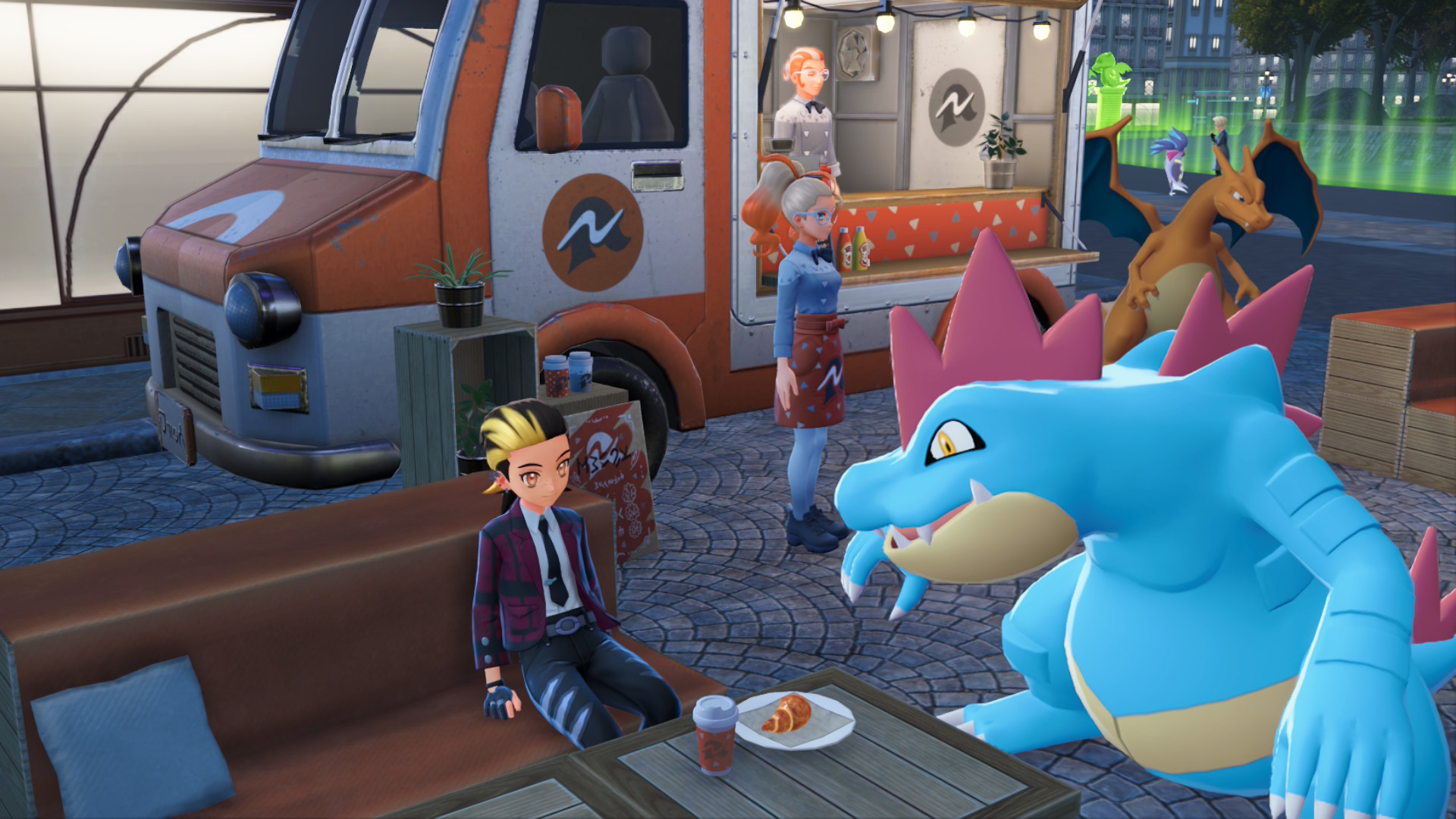 |  |
In no way is Legends AZ a perfect game (I don’t even think it’s my favorite Pokémon game in the past few years) nor do I care to defend the shortcomings of Game Freak as a game development studio with an insanely large budget, but I do find it fascinating to track how Game Freak has learned through iteration over the past decade. Much like the Ryu Ga Gotoku series, each successive Pokémon game is an awkward stumbling step forward that tries to bite off new mechanics and concepts that prior games haven’t tried, and only after a given idea has been given a few rounds in the rockgrinder of implementation does it really come together.
In particular, Legends AZ feels like the culmination of open world mechanics that the series has been flirting with since the Wild Areas of Sword & Shield. Both Legends Arceus and Scarlet & Violet took stabs at integrating how the player triggers a menu-based turn-based combat section with active targeting in the overworld, but only in Legends AZ does this lead to an “immersive” battle that retains the same modes of interaction as overworld navigation.1
Granted, Gamefreak has some awkward moments where they seem to move backwards between generations (see: character customization), but Legends AZ is the first game to really feel thematically cohesive and nail an anime-as-hell cinematic feel for its climax.
Life in plastic (It’s fantastic)
If you’ve been reading my status updates, you probably saw hints of my descent into plamo2. I didn’t realize this was a hobby that would grip me so thoroughly, but it’s been a nice excuse to stay offline. Working with my hands, away from a screen, while doing detail-oriented sanding and assembly work and listening to an audiobook is such a great way to spend a few hours unwinding.
 |  |
In particular I’ve been greatly enjoying Bandai’s “30 Minutes” series, which includes the mecha-centric “30 Minute Missions”, anime girl-centric “30 Minute Sisters”, and dark souls npc-alike-centric “30 Minute Fantasy” lines. Each kit is affordably priced and parts are cross-compatible across different kits and series. This level of flexibility and modularity has earned the series the moniker “lego for gunpla”, which is both incredibly apt and also explains the itch that they’re scratching.
I do intend to keep up with the hobby and continue to tinker with customizing models, but I think I’ve finally worked through the demon that was possessing me to do this with all my free time for a month.
Building these kits has also given me another level of appreciation for mecha design– if I took another crack at designing Epsilon (Bug Grinder), some of the joint details and panel decoration would come out a lot differently.
Print and Other Crafts
While I primarily engage with digital media these days, be it through indie visual novels or through audiobooks, I still frequently put in orders at my local bookstore for print books. When I picked up both of these books in October, I got a “Is this really the book you special ordered?” from the clerk. 😅
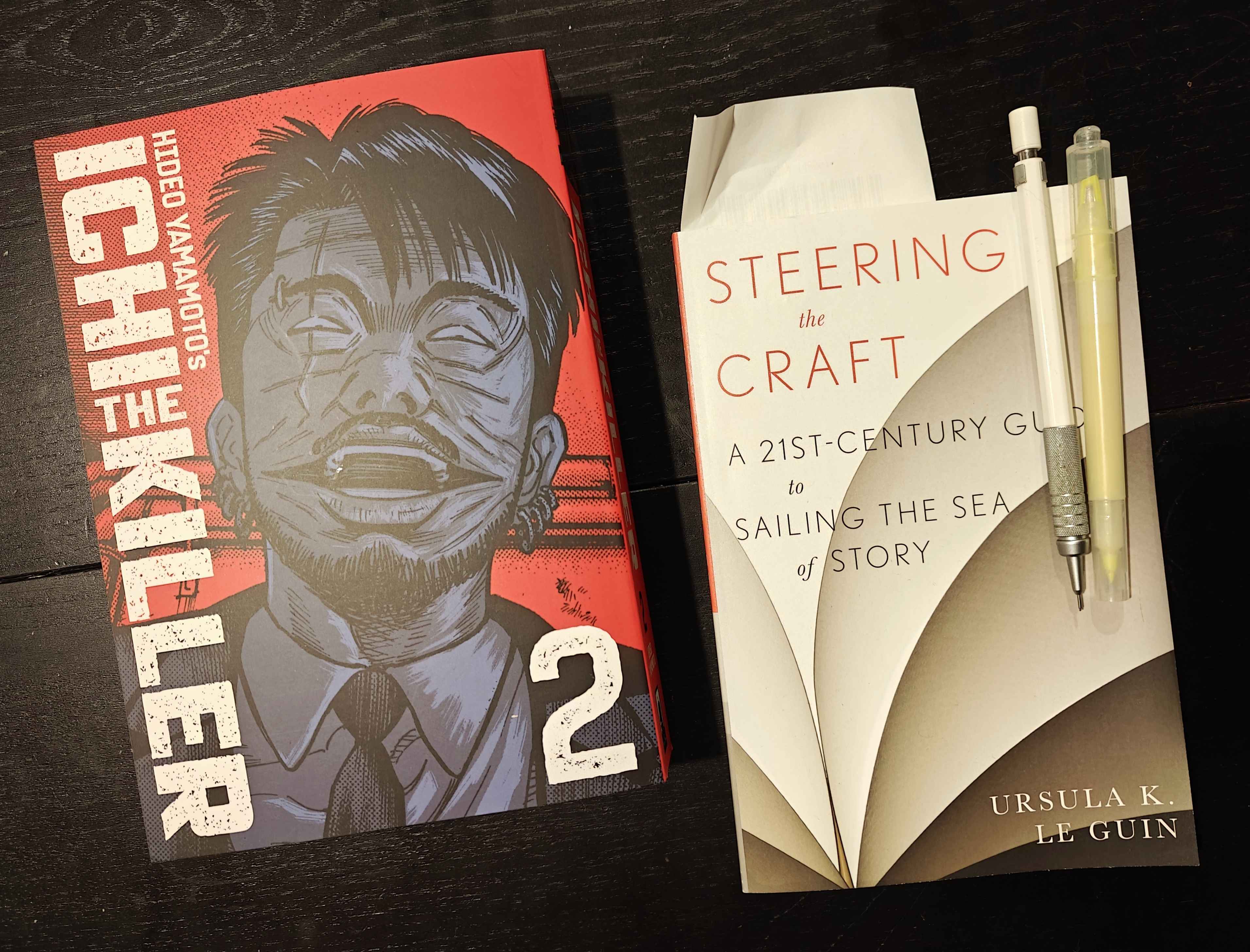
Both of these books ended up being core parts of my vision and development process for BDSiM, although this was rather unintentional for one of them.
I know that my weakspot in creating a visual novel is prose– I’m reasonably confident in my visual art abilities, have a strong sense of how to tie the big picture vision of a story to its intended themes, and know that I’m hot shit when it comes to programming, but writing? Dear reader, even though I am trying my best to inform and amuse in this personal correspondence, it is a belabored affair. Turning ideas and concepts and scenes into sequential letters and stringing them together on the page has always been a struggle for me, even now as I write this blog post.
I look up to the great Ursula K. Le Guin and her absolute mastery over prose, something that she exerts so effortlessly that it makes me appreciate the use of language as an artform in and of itself. Reading her book on creative writing and hearing what she has to say on the nuts and bolts of language has been an absolutely illuminating experience. Between witty examples and insightful commentary on interpersonal communication, her explanations on how certain written conventions work have made many aspects of the act of writing click in my mind.
Steering the Craft is an easy read, and I have been reading through the book (and performing the writing exercises paired with every chapter) at a steady clip. I expect to be finished before development starts on BDSiM, and I also expect to be a much stronger writer for going through this process.
(The part where I actually start talking about sadism)
Now, for the other book… Ohhhhh Koroshiya Ichi, where do I begin…
Well, I guess I can start with the fact that this book is very close to me, in part because first reading it many years ago was what made my sexuality finally make sense. While I had certainly heard of the concept of sadomasochism before reading this manga, in my mind it was always something that had to be paired with conventional intercourse. It never occurred to me that this could be desirable to people in a sexual way, but without any bumping genitals involved.
I feel like I have to mention that this is a manga that comes with a hearty list of (well-deserved) content warnings, and the way its characters discuss BDSM is far more indicative of their own warped ideas about desire than it is remotely safe, sane, or consensual. Maybe that’s part of why this manga is so precious to me– it fully embraces the messiness and confusion of human sexual desire.
I’ll spare writing out a proper review for Ichi the Killer, since that’s not really what I wanted to do with this post. I’ll just say that:
- It’s nothing short of a small miracle that this finally got an English physical release, and that they did a good job with both the translation and printing, and
- If you enjoy sadomasochistic, psychological crime fiction you really owe it to yourself to check this one out.
Now, given what I’ve said about the manga so far, I imagine that it could be a bit surprising that this manga was unintentionally a core influence in BDSiM. I’ve been kicking around the core concept for BDSiM since the Toxic Yuri VN Jam ended, and over time it has gathered depth and themes as I molded the idea in my mind (and on my Obsidian canvas). But it’s true– despite being such a cornerstone of my favorite relationship dynamics and relation to sadomasochistic desires, Ichi the Killer is something that exists in my mind as an amorphous vibe. Actually revisiting the original text for the first time in a few years helped to clarify some core characterization that I was struggling with.
Do forgive some of my vague wording here, reader. I hope that this connection will speak for itself once the game is out– I don’t want to completely show my hand.

Oh, the ero/horror (Indie VN Roundup)
As I pick my way through the submissions to the Erohorror VN Jam, there are a few standout entries that really grokked my brain chemistry. I’ll be honest: I’m really picky when it comes to NSFW material, and wide swaths of it just do nothing for me on an erotic level. I wasn’t confident that I would feel the ero- side of the erohorror in this jam, but these games pleasantly surprised me.
Digital Boymeat
This is a porn game that knows what it’s about and does not fuck around.

Goregeous art with a pervert’s attention to detail (depending on the branches you take, the injuries from prior choices are still visible) and delicious descriptions of pain. The energy between the two leads adds a fun dynamic to the piece, because if the player avoids escalation, Egon will take the torture into his own hands. The various endings also provide satisfying emotional payoff, detailing how (consensually) torturing a guy for a porn film could go very, very wrong.
Butterfly Æffect: Papillons à Quatre Mains
Butterfly Aeffect is a game that boldly asks: just how many times can a Nice Guy make everyone in the room physically recoil at his antics before the targets of his affection decide to escalate the situation violently?
I was completely glued to my computer playing this game, with moments that made me laugh and cringe in equal measure. As a game, it has much to say about mid-aughts anime fandom, questionably homoerotic friendships, the dance of soliciting relationships expected from this genre of visual novel, and the painful awkwardness caused by interjections from a well-meaning but clueless and unintentionally sexist oaf whose understanding of relationships comes primarily from ecchi.
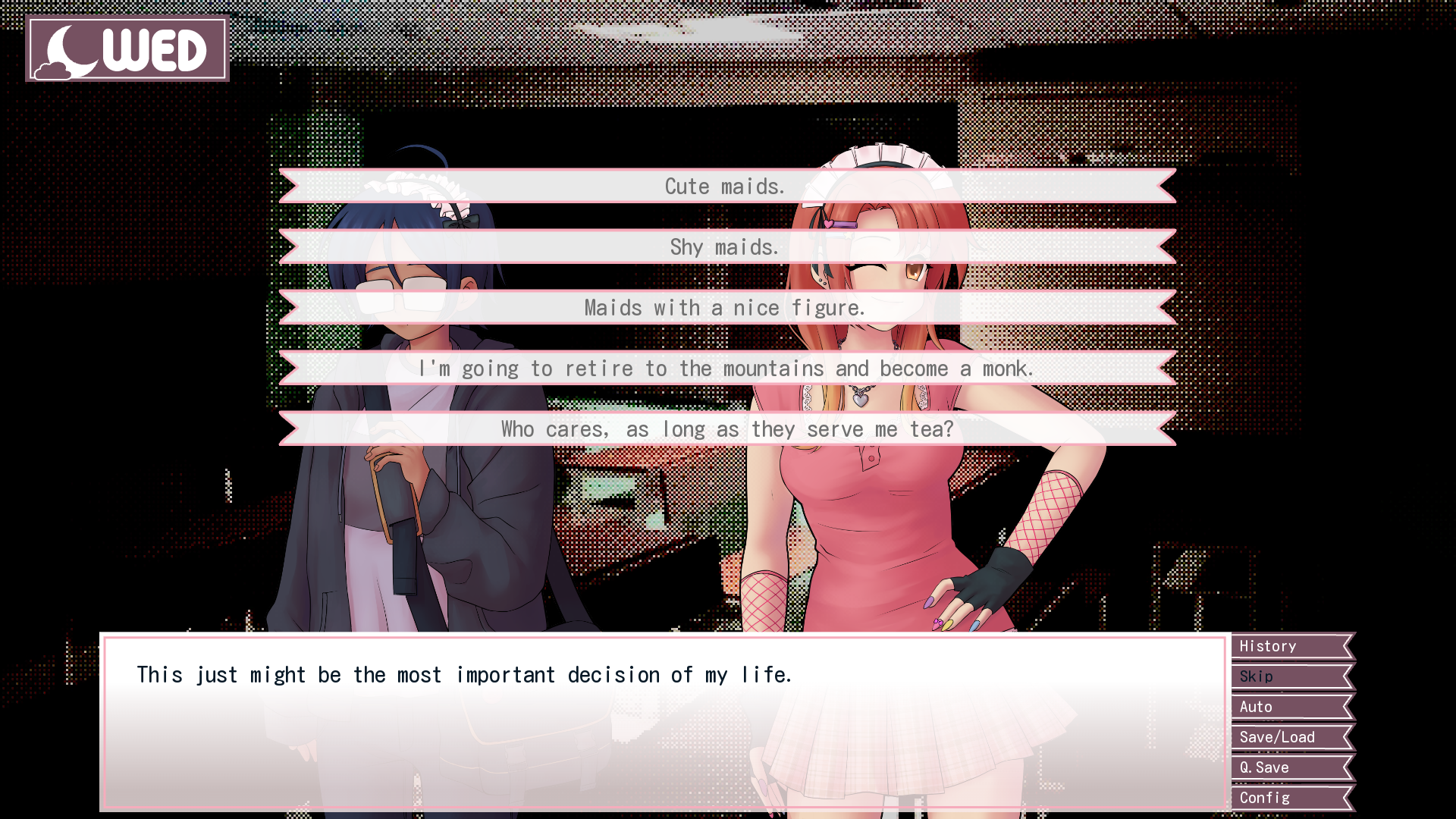
And the payoff when the erohorror side of the game kicks in and we see not only what the women were thinking the entire time, but how their own preferences and aesthetics inform how they go about torturing our dear main character? Absolutely scrumptious. Vi is truly a woman after my heart♥.
Cuscuta: A Prayer for Endless Winter
Okay: this isn’t an erohorror jam game. It also isn’t horror and is only lightly ero, but I feel like it belongs in this blog post for reasons that will soon become clear.3
One of the things that Cuscuta pulls off marvelously is the how the initial setup achieves dramatic tension by playing with how the two main characters enter the plot with different levels of understanding about the other’s secrets. The thing that I would like to discuss is beneath multiple layers of obfuscation, and rather than risk spoiling the experience of peeling back these narrative layers, I will blur the following discussion. You can unblur it by hovering/tapping on each paragraph.
Cuscuta is a game about seeing and being seen. There are multiple layers to this for both characters, between Goldthread’s rather deliberately coy “homewrecker” persona and Alfalfa’s superficial adherence to comphet and overall restraint around Goldthread, and the way that all of this gets peeled away as the women grow closer and start to appreciate that they are being appreciated for who they actually are.
The aspect of this that really struck home for me is Alfalfa’s sadism, something innate to her affection, and the way that this has ruined prior relationships and causes her to maintain distance in subsequent relationships to prevent this from happening again.
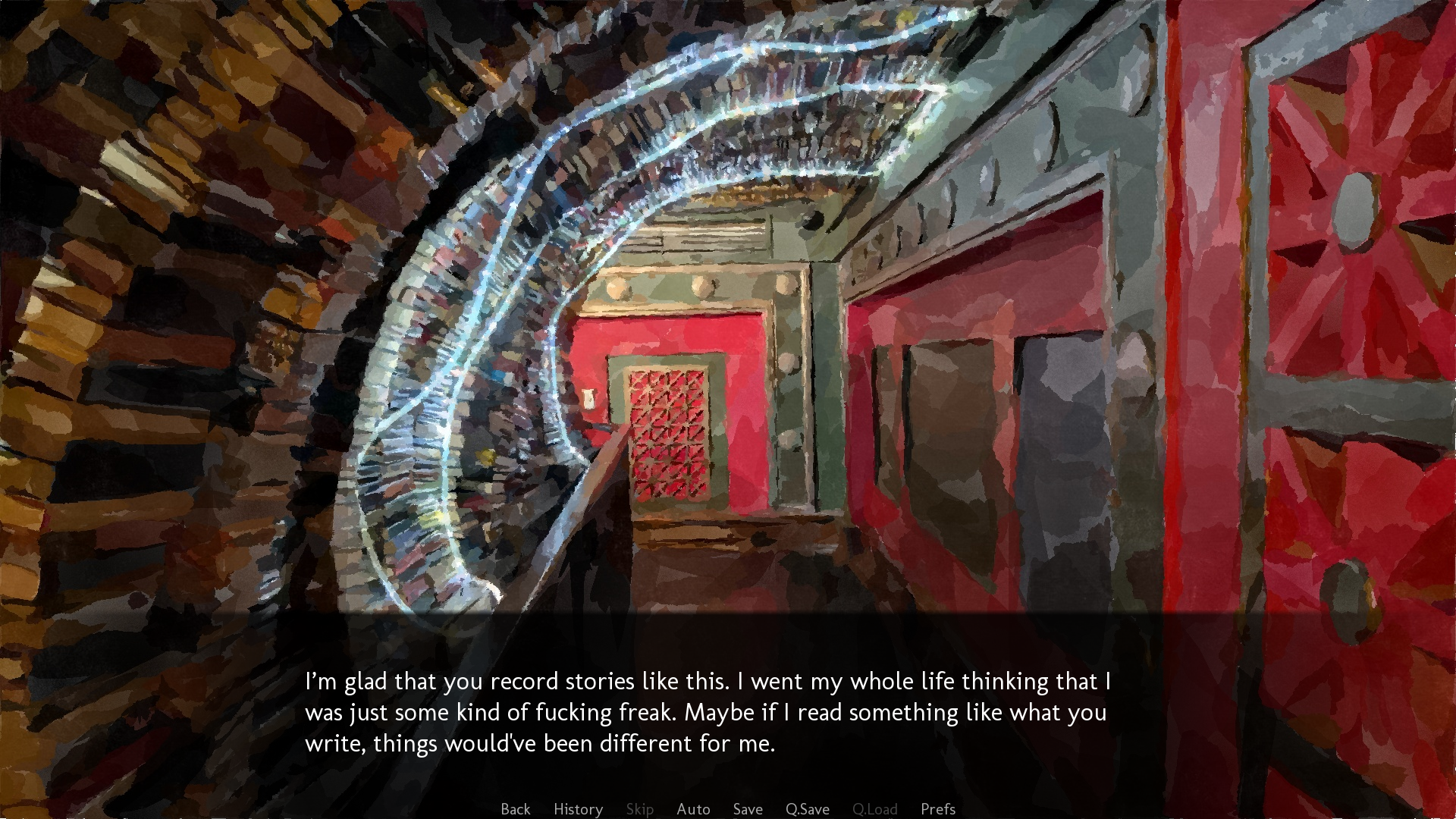
It’s hard for me to articulate exactly why this resonates with me so deeply (aside from the fact that it is a beautiful piece of art), but I can safely say that a part of this is because this game about being seen for who you really are made me feel seen.
Bi-Monthly Article Roundup
I’ve been meaning to do something like this for a while. I do a nontrivial amount of nonfiction reading on a daily basis, and there are things that I think are neat and worth sharing or commenting on. I guess I could just post this kinda thing to my bluesky account, but I feel like I’ve curated a more fandom-y space there: this is where you go if you wanna see me nerd out.
Bad End: The Seduction of “Game Over”
This article talks at length about one of my favorite topics in game design, how the experiences that the player is put through are just as much a part of the narrative as any writing is.4
“…the way a game frames your failures acts as an invitation, an opportunity to convince you to stay immersed, to remind you that you’re having fun, or at least something like it. It’s bargaining, it’s persuasion, at times it is even seduction, and it’s this form which I am most intrigued by.”
This is definitely an article where I’m seated and taking notes rather than providing my own commentary. While I’m not the flavor of masochist described by the author, I enjoy embracing this kind of “play” between dev and player in the same way one might have “play” between a dom and sub, and I definitely find the same metaphors of tension and release to be useful to describe driving a narrative.
The push and pull between tedium and “reward” for losing is definitely something I plan to keep at the forefront of my mind when tuning difficulty and UX in BDSiM. Between the natural knowledge-based learning curve of a stat-raising game and my early experiences learning to play Uma Musume, I definitely have some ideas about where to take this.
SimCities and SimCrises
I’ve long since been familiar with how SimCity is not an “accurate” simulation of running a city, and that this dissonance is in part due to the (libertarian) political beliefs of the man who created it,5 but this is the first time I’ve seen the specifics of this dissected thoroughly.
“Games dealing with social issues always make some kind of argument, even if the designers don’t intend to persuade.”
This article also opens a discussion on something that I’ve been idly mulling over for a while, which is that to gamify a simulation, it is necessary to have player-adjustable knobs which alter the simulation in expected ways. Some design decisions may be informed more by a desire to give the player the expected response to their input than by any intended political message or overarching theme.
This is partially the nature of devising cybernetic equivalents for real-world systems. In reality, system dynamics can be incredibly complex and interact in unexpected ways; Any simulation of a real behavior is an attempt to simplify complexity into a form that is able to predict outcomes under useful circumstances.
A good design is just as much about defining what those “useful circumstances” are as it is about using math to describe system behavior.
All models are wrong, but some are useful.
——statistics adage
I can definitely think back to the simulation games I’ve played over the years and point fingers at some of the places where my input didn’t lead to understandable behavior– and in all of these cases, this is because the specific “A causes B” that I was imagining was not a direct part of the design specification for the system, but instead separated by several layers of abstraction.
I was putting my foot on the gas pedal with the expectation that it would make the car go faster, but I didn’t know that there were lemmmings in the car engine that needed to be fed fruit in order to convert gasoline into motion.
The Game Theory of How Algorithms Can Drive Up Prices
So, on the topic of simple interactions leading to complex downstream behaviors,
“Many different choices led to high prices when pitted against a no-swap-regret algorithm. It’s an outcome you’d expect from collusion, but without any collusive behavior in sight.”
Game Theory is always a fun lil field, if you ask me. A “game” in the game theory sense can be viewed as a type of simulation, and many of the same caveats about defining circumstances for the game/simulation apply. Sometimes the math can easily explain the ideal strategy a player should take, and sometimes, like in this article, the math has to catch up to the human intuition for how to play a given game.
At the intersection of sports and gambling
How cheaters rigged high-stakes poker games with the mob and sports pros, according to authorities
When this story hit the headlines I was tracking down as much about it as I could– it’s the kind of thing you’d expect to see in a movie. I particularly enjoy the wide range of techniques employed, from social engineering to hacking cameras in card shufflers to good ol’ fashioned card marking.
How Hacked Card Shufflers Allegedly Enabled a Mob-Fueled Poker Scam That Rocked the NBA
Quite amusing that there was already a story-in-progress on the riggable card sorting machines when the mob story broke.
Gaming industry could face repercussions from NBA-Mafia gambling case
The legalization of widespread online sports betting in the ‘states leading to players colluding to score big? Who could have seen it coming?
Men Are Betting on WNBA Player’s Menstrual Cycles
I don’t have much to add to this one other than an exhausted sigh. Like, of course this shit is happening.
FOSS: Hope for the future?
Python plan to boost software security foiled by Trump admin’s anti-DEI rules
The effects of current US administration policies on domestic funding of the sciences has been chilling, to say the least. I have to admit that seeing The Python Foundation unanimously withdraw their application (rather than submit to stripping DEI initiatives) and keep on keeping on makes me feel hopeful.
Why Signal’s post-quantum makeover is an amazing engineering achievement
Even if the math goes over your head, I feel like a level of appreciation is needed for the people who engineered this and released it for free. The threat of quantum computing undermining public key encryption has been a looming threat for some years, and with this algorithm it’ll be possible to mitigate that without excess computational cost.
Renpy Dating Sim Engine Development
As a part of my pre-development phase for BDSiM, I’m planning to make some engine tweaks to the RenPy Dating Sim engine and release it publicly for other people to use. While the core engine is plenty functional, but are a handful of missing features that would be incredibly useful for a game whose design philosophy is heavily informed by a roguelite game like Uma Musume.
I have a fork of the engine on my new GitHub account, and the summary of the changes I intend to make are copied below:
-
Update core renpy files to modern versions(completed) - “Relationship status” screen that shows selected stats
- Optional “Hardcore” mode, which disables saves and stores all user data in persistent variables
- Optional “Quick” mode, which skips already-seen events faster than renpy text skip
- Allow specified random events to be rolled before player makes schedule selection, and display “hints” for the respective activities
- Event viewer menu, which allows the player to revisit any scene that they have already seen
- Stretch goal: refactor some objects into
_ren.pyfiles and write a framework to simulate playthroughs and predict player stat gain under different play strategies.
If this project is something that you would be interested in, either as an engine dev or a game dev, please don’t hesitate to reach out to me in the comments or through any of my listed contact info.
In Conclusion
If you’ve made it this far, thanks for taking the time to read this snapshot of my mind. May your next creative adventure be fruitful and self-indulgent.
Footnotes
-
To draw another comparison with the RGG series, this change parallels the way combat segments are handled in Y4 engine games vs. Dragon Engine games. This is probably the result of wider industry trends, but making that argument takes a bigger view of the modern RPG genre than I currently have. ↩
-
Short for “plastic model kits”; think gunpla with non-Gundam characters. ↩
-
And also I read it in the past two months, so. ↩
-
An idea closely related, but not identical to, ludonarrative dissonance/consonance. ↩
-
And this isn’t just bias because I was terrible at the game as a kid, either. ↩
Status for 2025-12-01
Rotating all aspects of BDSiM in my mind.
- Now developing: Renpy Dating Sim Engine improvements
- Now listening: The BDSiM playlist (it’s a lot of Oingo Boingo, PIG, and Depeche Mode)
- Now throwing spaghetti at: The obsidian vault with my BDSiM outline and simulation gameplay specifications
Status feed
Related Posts
previous post 20251010_
Comments
Site contents and theme by Hamaonoverdrive.
No comments yet!